Conspicuous consumption vs inconspicuous investment

Even though it rankles, splashing the cash may be missed as funds are stashed away instead

Wealth has always been something to put on display as it shows that you are doing better in life than other people. Even though it can be irksome, there is some good in people parading their wealth as their outlays provides employment opportunities for others. Yet, it may be the case that such shows of prosperity are becoming less common as flaunting one’s good fortune is increasingly frowned upon. Instead of being spent, money is likely to be put to use so as to bring in more wealth, and the resulting shift from showy spending to prudent investment could be hurting the economy and driving up inequality.

It is commonplace in most cultures for the upper echelon of any society to have a way of showing that they were above everyone else. It often would require, as a way of showing their dominant position, getting their hands on objects that took much effort to produce but tended to serve little practical purpose. Such shows of prestige could include anything from extravagant head dresses for a native American chief to a modern-day highflyer driving a high-performance sports car around city streets. It is such a common occurrence that it has been given its own label – “conspicuous consumption”.

Putting aside whether such a practice was good or bad for those at the top or for society as a whole, the economy benefits from the extra spending. Any cash used for flashy clothes or showy interiors would provide work for people who may have otherwise been left unemployed. And funds used to purchase luxury items would result in more money flowing out of the wallets of the wealthy into the economy and hence benefiting a wide range of people. The overall effect would thus be to boost employment while also acting to reduce inequalities.

The concentration of funds in fewer hands can be seen as unfair by some but can also have a positive impact on the economy. Large differences in wealth had been justified (by those on the right) through the notion that more money in the hands of those who have been successful in business can be used to create more jobs. The label for this is the supply-side trickle-down effect whereby funds of the rich help create opportunities for others. In comparison to this, conspicuous consumption has a similar effect but works through the demand-side of the economy so as to raise spending and shift wealth to those with less.

Yet, as society as a whole becomes better off, the tolerance of extravagant displays of wealth could be diminishing. It could be that, with their hard-earned prosperity, the middle classes dislike being shown up by those higher up the social ladder. Yet, frowning on the lavish habits of those with more money also means that the extra spending that would provide jobs is less forthcoming. As a result, the irony is that the growing social stigma against displays of wealth could then act to increase the likelihood of a larger gap between rich and the rest. Hence the dislike of the wealthy could actually serve to strengthen their position at the top.

Money that might have been spent conspicuously on consumption is now more likely to be put to use inconspicuously as investments. Along with less money going towards lavish spending, the well-off have also benefited from changes in the economy and so have larger incomes with which to invest. The growth of the finance sector also means that there are an increasing range of avenues for putting funds to work so as to earn more of a yield. Yet, investments do not benefit the economy as in the past due to much of the extra cash tending to go toward lifting the prices of existing assets rather than towards new business or infrastructure.

On top of this, the rich are also devoting funds so as to cultivate their talents as a means to gain access to high-earning employment now on offer in the global economy. While such routes to large incomes also open up an avenue for gifted individuals to rise up the ranks, it is also true that those already at the top are best placed to pass on the advantage to their children and others around them. Large outlays on education are the main route to ensure a spot at the top table, while connections with those already at the top also proves helpful for up and comers.

As such, the frivolity of conspicuous consumption has been replaced with the more circumspect approach of inconspicuous investment. It is not yet clear whether these changes to the economy have had enough of an impact to warrant concern. If it is the case that economic growth is being hampered by a decline in spending by the wealthy, the government could always step in to readdress the balance. Higher taxation targeting those with big incomes or large pots of wealth could be used to shift spending power to where it is more likely to be used. This action would come with the justification that a healthy economy is for the benefit of everyone, but such a stance may be difficult to sell politically given the current political climate. However, a change could be possible if it were the growing gap between rich and poor that became more conspicuous.


All work and no gain

Workers may need to battle for more than just their jobs

It is one of the big truths in economic theory – there will always be plenty of jobs to go around. Even if some workplaces disappear, businesses are expected to come up with ways of putting any excess labour to good use. As long as people can earn wages and have money to spend, there will be employment options to via for this cash. But this insight was based on how the economy had been operating in the past when workers could move so as to use more technology at their new employers. With the job market increasingly offering up less scope for wage gains, more work may not be the solution.

Labour is like any other resource in the economy in that it needs to be able to move around to be put to the best use. Losing one’s job (which even the Free Range Economist has experienced) may put the individual in a tight spot but would be good for the economy as it would help get workers to where they are most needed. This process is easier for workers to stomach if there are lots of other employment options available and especially if decent wages were on offer elsewhere. Manufacturing was a bonus in this regard as workers could be made more productive compared to other forms of employment through greater use of machinery.

Yet, this trend seems to have gone into reverse as factories have been moved offshore and automation often means that workers need fewer skills and are more interchangeable. Along with the demise of manufacturing, the transition from producing stuff to offering up services has exacerbated the deterioration in job prospects with the service sector notorious for low productivity. The changes have not hurt everyone but a lucky minority have benefited through being able to provide specialist skills over a global market. As such, the productive capacity of those at the high end have shot up while work options for many other continue to dry up.

Amid these changes, the economy continues to grow with average output among workers edging upwards. Yet, stripping out the extremes in the earners of global highflyers would likely show that most workers are suffering from a tapering off in productivity (and hence wages). This trend would be worrying not only for workers shifting to jobs that are lower in pay (and likely less fulfilling) but also that there might be mechanisms at play in which a decline in the spending capacity of the bulk of consumers could make the situation worse.

Smaller pay packets for many people would see more money being spent on cheaper goods which are more likely to be mass produced with high levels of automation. Such a feedback loop could see falls in spending power bolstering businesses that pay out less in wages. The income of the middle class which had been the bulwark of the modern economy would be eroded with only a minority being able to generate higher earnings.  Even if a few high earners have even more cash to splash around, such free spending would unlikely be enough to replace the drop in incomes elsewhere.

The overall result could be a splitting of the economy to either use mass production at low costs to serve people with little to spend or provide high-value products in small batches for the affluent minority. This outcome would be markedly different to the first few decades of the postwar era when inequality was less prevalent and people would shop at the same places irrespective of their income. The current state of affairs is, in some ways, a return to the past in terms of the opening up of a large gulf within society, similar to but not as extreme as that between princes and peasants.

Economist have not raised much concern about such an eventuality as it is more the quantity of jobs rather than the quality that has been given priority. But this rationale in economic theory has been backed by the tendency for wages to rise over time which has been a feature of modern economies since workers left farms to work in factories. People could be put to use with higher levels of technology but this trend may have gone into reverse as automation picks up more of the slack in the workplace. The deteriorating prospects for workers with fewer specialist skills means that business has the upper hand in setting the rules as shown by the way in which companies can sidestep labour regulations in the gig economy.

Companies have been given the freedom to go about their business with government policies often aiming to offer support with the ultimate goal of providing people with employment. Despite business and workers often being promoted by different sides of the political spectrum, there is common interest in finding a balance in which both sides prosper. As such, any decline in the fortunes of workers will ultimately hurt their employers if lower wages feed through to drag down revenues due to the economy getting trapped in a loop whereby lower wages mean less spending.

If this trend persists, any changes in the economy will likely come with increasing levels of hardship as the loss of work will also tend to come with a pay cut. The skills required to rise up the pay scales have also become harder to come by as technology can accomplish more of the tasks required in workplaces. Making sure that everyone has a job may not be enough if workers are facing deteriorating prospects. The politics of self sufficiency and individual responsibility may become less palatable if hard work on the job no longer provides a route to prosperity. Putting in the hours will not be enough if more work does not make up for less pay.

Into the (money) sink

Sinking more and more money into houses may be bad for the economy

A sink is not only something that we wash dishes in but also something that can absorb substances from the surroundings as a carbon sink does. While containing many of the first type of sinks, houses may also end up being like the second type in terms of soaking up money from the economy. Rising prices for property mean that many people must put aside more and more funds to buy a home. Without the need for such savings, the money would typically have been spent and flowed through the economy. More funds going into bricks and mortar maybe thus damaging the economy outside the walls of our homes.

Owning our own home is a desire for many people who thus must save up money for a deposit and then spend years paying off the mortgage. Property has also become a form of investment for many who buy houses to let and thus earn an income. But the demand for places to live (or rent out) has not kept up with availability in many locations (typically large cities), resulting in rising house prices (and the cost of renting). In economic theory, higher prices are supposed to spur an increase in supply but rising housing valuations have had the opposite result – more buyers rather than more availability of housing.

On top of the many problems caused by the booming property market, higher house prices could potentially weaken the economy through excessive amounts of money being tied up in residential property. The removal of such funds from the economy could be seen as a form of forced savings above the level that would be optimal. The issue with excess saving already appears elsewhere in economic theory, Keynes arguing that people would prefer to hold onto money during times of economic hardship. Such hoarding of cash would thus have an adverse effect on the economy as less funds would be spent, and higher prices for real estate could be having the same effect.

In both cases, the effect feeds off itself. Saving and not spending during a recession means taking money out of the economy, thus further exacerbating the problem. In a similar manner, a boom in house prices will prompt even more money to be drawn into property due to expectations of further gains. Yet, when seen as an investment, buying housing compares poorly in many ways to other forms of putting money away. Financial assets such as stocks and bonds have similar returns but also the benefit of much greater flexibility in terms of how much to invest as well as easy access to getting your money back when needed. Money invested in financial assets can thus be put away as savings mount up and can easily conform to the needs of the investor.

As well as money away being stashed away, a large lump sum investment in a home also tends to lock people down to a specific location which may limit their work options. Studies have shown that people tend to move less in search of work compared to in the past and the growing investment required to own property is seen as one possible explanation for this. Changing homes is also difficult due to the high transaction costs of both buying and selling property in terms of taxes and fees for real estate agents. The result is often that people can be stuck with property that does not suit their situation, either as a residence or as an investment.

Money flows out of the property market with the sale of houses but any gains for the seller often prove elusive due to the need to secure a new residence amid inflated house prices. Even if the benefits from a higher sale price are not sunk back into property, a rising housing market tends to shift money from people more likely to spend to those who tend to stockpile. This trend is due to the more well-off being the ones who own property and thus benefiting from rising house prices but who are more likely to put any cash windfall into other investments rather than spending the funds.

While those on low incomes suffer as rent rise in line with higher house prices, the middle class could possibly be seen as the main victims. Those with moderate earnings have the financial capacity to invest in buying their own home but tend to have little money left over. Being in such a position involves sacrificing spending to fund the house purchase but also greater risk if something goes wrong. The middle class is already on the backfoot, struggling most in the job market amid changes wrought by automation and globalization. The plight of the middle class matters beyond their own circumstances due to their role as an economic and political stabilizing force in most capitalist democracies.

Property prices are not likely to fall away anytime soon but the broader impact should be recognized in order to better manage the economy. In particular, monetary policy has been relied on for the past few decades to keep the economy ticking over but the end result of this has been prolonged periods of historically low interest rates. Such cheap credit has helped to buoy the property market as well as lift asset prices across the board, hence exacerbating the trends mentioned above. If more money going into housing is actually taking funds away from consumer spending, this would explain the need for more and more proactive monetary policy to keep the economy growing.

One possible remedy to this is a shift back toward more use of fiscal policy which is a trend that is already underway. Even more benefits could be gained if government money was to be used to build more houses which would provide both an increase in supply of residential properties (and hence temper price rises) but also provide incomes for people to buy homes (or spend as they wish). Another potential policy is to promote working from home as a means to lessen the need for people to buy housing in big and already overcrowded cities. More money for government could be raised from the people that have benefited from the housing market to help out with those that have been left behind. Without some drastic changes, we might continue to throw money into the proverbial sink.

Growing where

As the economy grows, much of the extra cash may not be spent

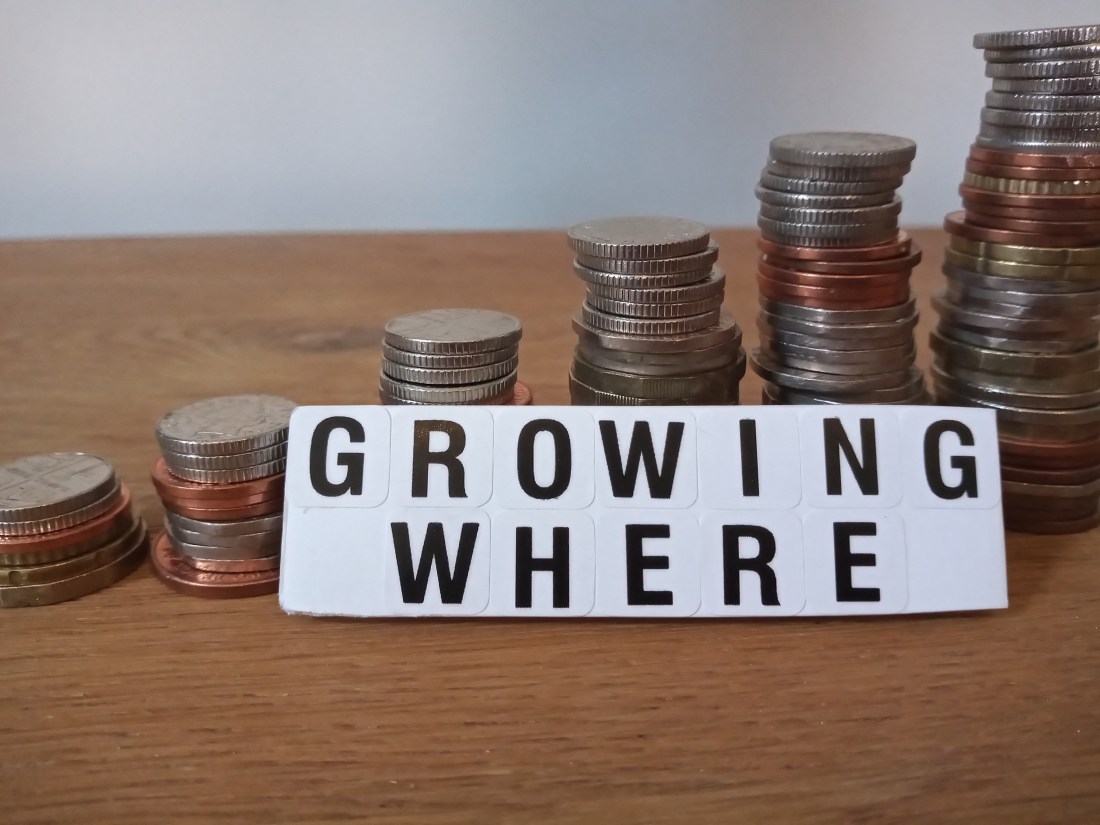
We all change as we grow, and this is also true of the economy. With incomes typically rising with economic growth, what we tend to buy changes as well, and this shift in spending also goes on to shape what is produced when we are at work. What we normally think of as the economy typically revolves around things to consume but increasingly money goes towards buying into investments. While this trend is given little attention within economic theory, it is perhaps having a bigger impact than is thought.

There has been a change to the things that we buy as economic growth has progressed. With more people earning bigger pay checks, spending is shifting from things that we need here and now to money put away for the future. Like most things in the economy, more demand for places to put away cash has resulted in an increasing range of options of what to invest in. A whole industry has been built up on providing investment products for those with money where ever they might live.

In the past, any money stashed away as savings in the bank didn’t really earn much. The financial deregulation that started in the 1980s changed this with an increasing emphasis on money being put to work. More choice about where your cash could go also meant that funds could better be directed to areas of the economy where it could be put to the best use. Along with the extra cash to be made by investors, those who played their part in moving money around also got paid well for their role.

Economic theory would suggest that any money put aside is beneficial as it frees up important capital to be used by businesses to expand profitable ventures. Yet, the reality seems to be that many of the large companies have a surplus of cash, much of which is used in share buybacks rather than investing in new business. And banks no longer rely on deposits to issue loans to smaller businesses as they might have done in the past. Rather than going towards supplying goods and services to sell, funds for investment often go into buying an asset that someone else owns and wants to sell. This asset could be a stock or a bond but could also be a property or something more exotic like an artwork or vintage bottle of wine.

It can be assumed that demand for such investments must be growing as the prices for things that people buy to invest in are increasing. Rising demand seems intuitive as greater levels of wealth mean that there is more money available to be invested. For prices to rise, it is not enough for demand to be high but also that supply must be unable to keep up. It seems to be the case that coming up with new ways of making money from money is not that easy. Excess demand is most notable for less riskier investments with some investors prizing safety so much that they are willing to tolerate negative returns on some government bonds.

This trend might be something that is inherent to capitalism and will continue to build up over time. But there are also factors that are not permanent which may mean that demand may ebb away in the future. For example, less money might go into investments due to selling brought on by the retirement of the baby boomer generation who have built up financial assets to provide them with income into their old age. Also, some countries, such as China, also generate surplus capital that is channelled into foreign financial markets but these flows may dry up once options for investing in their domestic markets increase.

Whatever the source of excess demand, the resulting rising prices for financial assets contrasts with the relatively weak demand for goods and services in the underlying economy and the low levels of consumer price inflation. It may be the case that funds diverted towards investment tends to take money away from spending on goods and services which may have contributed to subdued inflation. After all, higher earnings are not likely to translate into more and more consumption, while investments can continue to mount up as incomes rise.

The increasing amounts of money going into investment products has the potential to change the way money flows around the economy. Normal consumption involves buying things that would have been made elsewhere and transported to the location of sale where staff wait to provide assistance. Or it may involve a service whereby an output is provided by someone on request. Purchasing goods and services thus typically involved substantial amounts of labour enabling a wide range of people to earn a pay packet.  

Investment products do involve some labour but the amount of input involved is usually relatively small especially considering the large sums that are typically involved. The workers involved are also concentrated, both in terms of geographical space (financial centres such as New York or London) but also with regard to the type of workers (educated and white-collar). Their spending could also be seen as being different to the average worker such as more money flowing to other places through, for example, the purchase of imports.

While the production of investment goods is narrow in its scope, the benefits from the money put away are also mostly captured by those owning the assets rather than being spread out through the whole economy. Higher asset prices do not serve any economic purpose (an increase in the cost of buying property should increase the number of houses being built but often doesn’t) but instead just results in a shift of funds to the owners of the assets. This issue is likely to worsen as the gap between those who have and do not have money in investments expands as financial assets are becoming pricier while wages (which cannot grow much faster than consumer inflation) are relatively flat.

On top of this rise in inequality and its economic consequences, a bigger finance industry is also problematic in terms of being a source of instability in the economy as seen in the dotcom bubble and the global financial crisis. Growing disparities in earnings also create problems in terms of social cohesion and can impact negatively on the political system. Another potential issue is the effect on aggregate demand in the economy. Not only is potential spending diverted into investment but the extra income going to the wealthy is less likely to be spent. This is because those with high earnings are likely to spend less when provided with more cash to spend compared to people on lower incomes.

The obvious conclusion from this trend is that asset prices will continue to rise as more money gets drawn into investment products unless there is a dramatic shift in either demand or supply. Such a trend would impact on how the economy functions and thus on attempts by policymakers to manage economic booms and busts. For example, the abilities of central banks would also likely suffer as measures such as quantitative easing (designed in part to boost asset prices) would have a diminishing effect. As already mentioned, boosting the earnings of holders of investment has less impact on overall spending and so monetary policy often struggles to gain traction.

Such difficulties have resulted in a recent shift to give greater emphasis on fiscal policy which allows for money to go towards people more likely to spend it rather than add it to their stockpile. Further government action might be necessary to avoid an economy where wealth continues to grow faster than incomes. Such was also the case around a century ago and it took unprecedented social and political change for wage-earners to make up lost ground and broader economic growth to take hold. With the value of investments climbing higher while prices for other things remains relatively flat, it is not obvious what it might take to (yet again) rebalance the economy and where, left to its own devices, economic growth might be heading.